
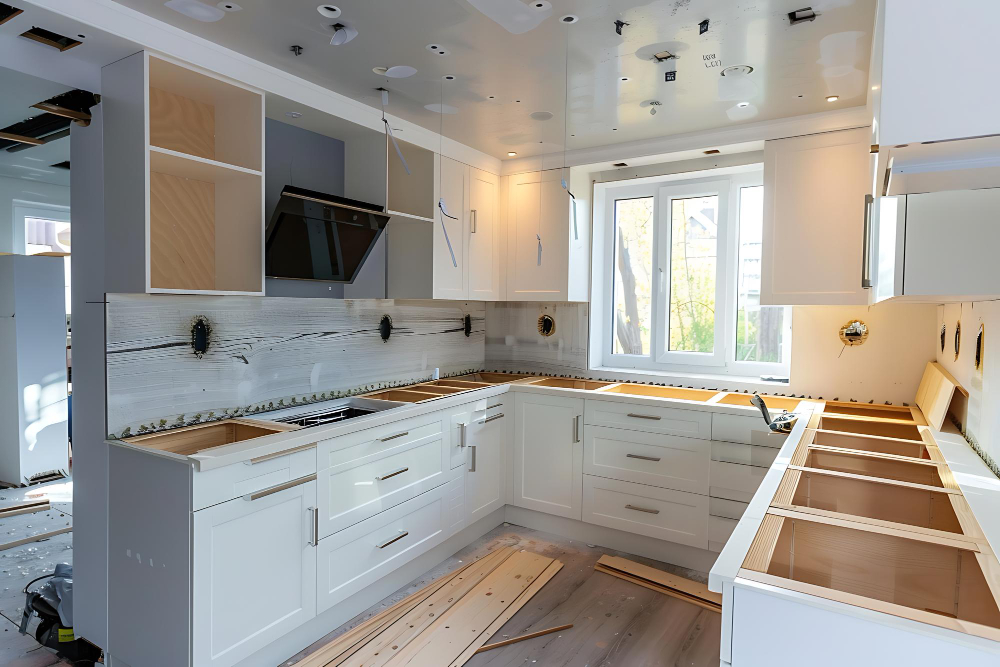
Most kitchen renovations run anywhere between $25,000 and $45,000 for a standard sized space. How you allocate that budget determines whether you end up with a kitchen that looks expensive or one that simply was expensive. The difference comes down to understanding where premium investment delivers lasting value and where budget-conscious choices work just as well.
The strategy below prioritises durability and daily function over superficial upgrades. Some elements such as the benchtops, appliances, installation quality deserve the bulk of your spending. Others like upper cabinetry and decorative extras offer easy savings without compromising the finished result.
Work Out Your Non-Negotiables First
Before selecting finishes or comparing quotes, identify what you actually need from the space. A family that cooks daily has different requirements than someone who entertains occasionally. A kitchen designed for resale focuses on broad appeal rather than personal preference.
Measure the room accurately and assess the existing layout. Can you work with the current plumbing and electrical positions or do you need to relocate services? Moving a sink or cooktop adds several thousand dollars in trades and compliance costs. Keeping major services where they are frees up budget for visible upgrades.
List your storage requirements based on what you own, not what you might acquire. Paying for cabinetry you don’t need wastes money that could go toward better appliances or stone benchtops.
Keep Layouts Simple & Symmetrical
Cabinetry typically consumes 35-40% of a kitchen renovation budget. This is where thoughtful restraint delivers the biggest savings.
Standard cupboards with adjustable shelves cost substantially less than pull-out drawers. Drawer systems require heavy duty slides, precise installation and more complex joinery. Use drawers strategically with one or two deep units for pots and pans works better than multiple shallow drawers throughout. Save the rest as cupboard space with quality shelving.
Symmetrical layouts reduce manufacturing costs. Cabinets with consistent widths and heights are faster to build and install. Custom-sized units, curved corners, and irregular configurations add complexity that increases both material and labour expenses.
Choose standard door profiles over ornate shaker styles or detailed paneling. Simple flat or slab doors look contemporary, are easier to clean, and cost considerably less to manufacture. They also age better as intricate detailing can date quickly while clean lines remain current.
Reduce or Eliminate Upper Cabinets
Wall-mounted cabinets require more material, additional hardware, and careful installation to ensure they’re safely secured. Removing them entirely or reducing their footprint can trim $3,000 to $6,000 from a renovation.
Many modern kitchens now use open shelving, floor to ceiling pantry cupboards or simply leave upper walls clear. This approach creates a more spacious feel, allows for feature tiling or artwork, and reduces visual clutter. The tradeoff is the storage capacity though. So if you have extensive crockery or glassware collections, you’ll need to account for that space elsewhere, perhaps in a butler’s pantry or full-height base units with deeper drawers.
Select Affordable Finishes That Perform
Laminate cabinetry has evolved far beyond the glossy chipboard of decades past. Modern laminates offer ultra-matte finishes, realistic timber textures, and solid colour palettes that suit contemporary design. They’re durable, easy to maintain and cost 40-60% less than painted or timber veneer options.
Textured laminates hide fingerprints and minor marks better than high-gloss or painted surfaces, which require regular cleaning to maintain their appearance. Matte finishes also photograph well and look expensive when paired with quality hardware and good lighting.
Standard colour ranges from major suppliers keep costs down, while custom colours or specialty finishes require minimum order quantities and longer lead times, both of which increase the final price.
For handles and knobs, brushed stainless steel or matte black powder-coated options provide a premium look without the cost of solid brass or custom-made hardware. Handleless designs with push-to-open mechanisms work well on modern flat-door cabinetry and eliminate hardware costs entirely.
Invest in Quality Hardware and Mechanisms
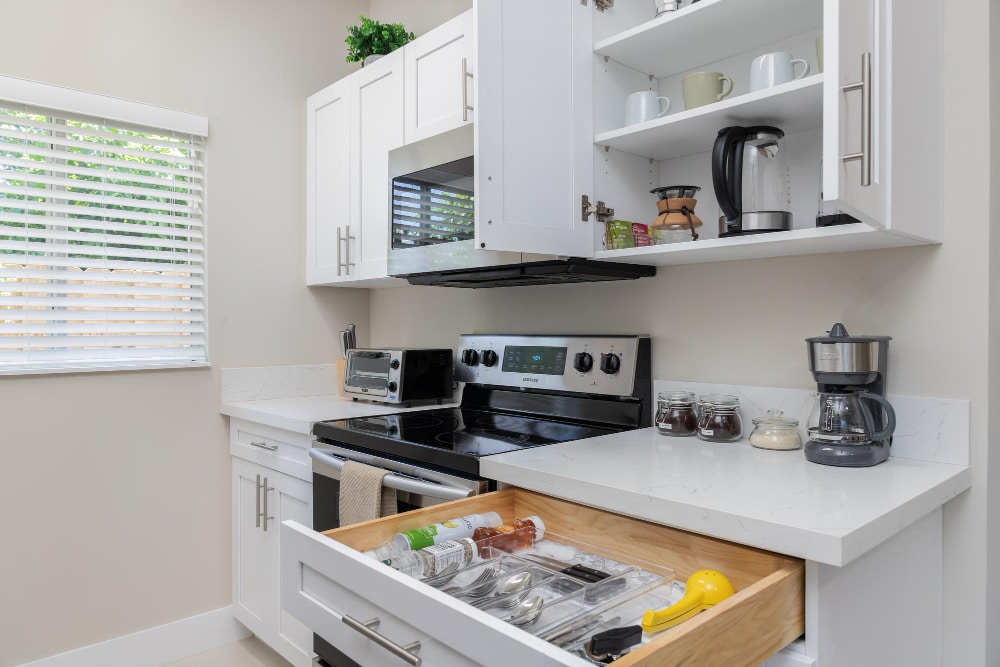
Hinges and drawer slides endure thousands of open-close cycles over a kitchen’s lifespan. Budget hardware fails within a few years, causing doors to sag and drawers to jam. Quality European brands like Blum or Hettich cost more upfront but deliver smooth, reliable operation for 15-20 years.
Soft-close mechanisms prevent slamming, which protects both the cabinetry and your nerves. They’re standard on quality installations and worth the modest additional cost. Adjustable hinges also allow installers to fine-tune door alignment, ensuring consistent gaps and flush surfaces. This precision makes the difference between a kitchen that looks professionally installed and one that appears cobbled together.
Splurge on Appliances That Last
Cheap appliances break down faster, perform poorly, and often cost more to run. A quality cooktop, oven, rangehood, and dishwasher represent a significant portion of your budget—typically 15-20%—but they’re in daily use and need to withstand years of wear.
Energy ratings matter for ongoing costs. A 4-star dishwasher uses roughly half the water and electricity of a 2-star model. Over ten years, those savings add up to hundreds of dollars.
For cooktops, induction models offer better temperature control and energy efficiency than gas or conventional electric. They require cookware with magnetic bases, but most modern pots and pans work fine. Gas remains popular in North Brisbane, but if your home has the electrical capacity, induction delivers better performance.
Rangehoods need adequate extraction capacity for the cooktop size. Undersized hoods don’t effectively remove cooking steam and odours, leading to moisture damage and lingering smells. Match the hood’s air movement capacity (measured in cubic metres per hour) to your cooktop’s heat output.
Built-in appliances create a streamlined appearance and maximise usable bench space. Freestanding units work fine functionally but lack the integrated look of a professional installation.
Put the Budget Into Benchtops and Installation
Benchtops occupy more visual space than any other single element in a kitchen. Engineered stone (like Caesarstone or Essastone) provides a premium appearance, excellent durability, and heat resistance at a mid-range price point. It costs more than laminate but substantially less than natural stone like marble or granite.
Standard colours obviously cost less than exotic patterns or rare stones. A 20mm thickness works for most applications and costs less than 30mm slabs. Simple square or slightly rounded edges are cheaper than elaborate profiles.
Laminate benchtops have improved significantly in recent part years, with many designs convincingly mimicking stone or timber. For tight budgets, a quality laminate benchtop performs adequately and can be upgraded later without replacing cabinetry.
Installation quality affects how the entire kitchen looks and functions. Poorly aligned cabinets, uneven benchtop joins, and visible gaps around appliances ruin an otherwise good renovation. Experienced installers measure precisely, adjust for unlevel floors and walls, and ensure everything fits flush.
Lighting Deserves Attention
Under-cabinet LED strip lighting costs relatively little but transforms kitchen functionality. It eliminates shadows on work surfaces and adds a polished, finished appearance. Warm white LEDs (2700-3000K colour temperature) suit most kitchen styles.
Recessed downlights should be positioned to light work areas rather than evenly spaced across the ceiling. Task focused lighting uses fewer fittings and delivers better illumination where needed. Pendant lights over islands or breakfast bars add visual interest but aren’t essential. If budget is tight, install the electrical rough-in during construction and add pendants later.
Getting Value From Your Investment
Smart kitchen budgeting means distinguishing between features that add genuine function or longevity and those that simply look good in a showroom. Quality appliances, durable benchtops, and expert installation deliver value every day you use the space. Expensive cabinetry extras, decorative mouldings, and premium paint finishes often add cost without improving how the kitchen actually works.